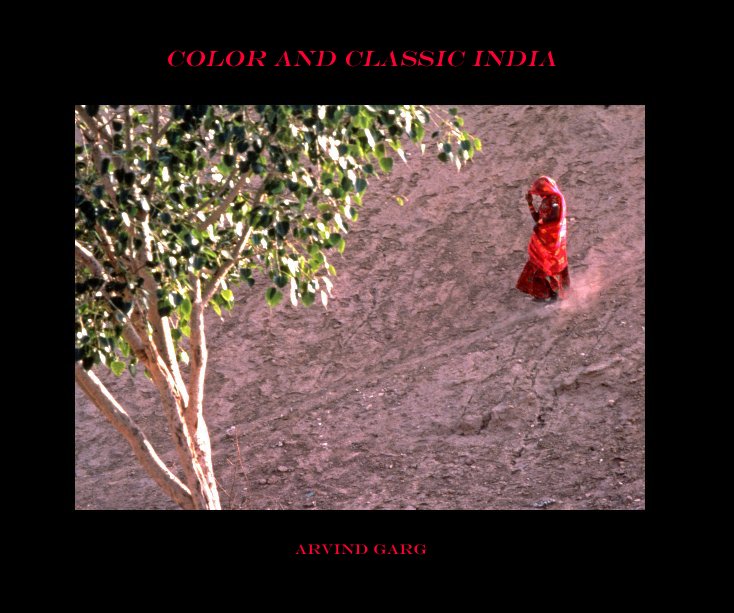
You cannot see the picture if you are in it. I feel I began to see India only after I left it in 1974 to study in Canada. Two years later I moved to the United States when I also purchased my first camera. Photography changed the way I looked at the world. Through self-education about the history of photography and by looking at the work of the great photographers of the world, I developed what is called a photographic eye. How it transforms one's view! Even one's native land begins to look new, different, mysterious.
For if before leaving India I heard children shrieking in the street or the noise of construction work on the road, I now saw interesting compositions happening before my eyes: the sudden playful movements of children, the brilliant colors in which women workers were clad and the peculiarly Indian gestures with which they went about their work. An unbeliever myself, it moved me to see the devotion with which my countrymen practiced their religions, or performed the countless rituals of marriage or birth or dying. The familiar became unfamiliar, visually revealing a reality that I was not aware of before.
In the last quarter of the last century I made several extended trips to India. During one such trip, in 1983, my mother and I traveled together in the south of India. This month-long journey became for both of us a memorable pilgrimage to the glorious landmarks in Indian history, art and religion. We paid our respect to the ancient monuments and temples at Ajanta and Ellora, Mahabalipuram and Madurai, going all the way to Kanyakumari, the southernmost point in India.
Apart from visits to see family, there were freelance jobs and commissions, including one in the early 1990s from Microsoft which was putting together their digital encyclopedia Encarta at that time. They gave me a dream assignment: two months of travel in India to make images out of which they will select what they wanted to use, and the rest were mine to keep. So I traveled across the length and breadth of the country one more time. It was an education about my native land as much as a photographic opportunity.
Another extended trip to India was with my wife Marina in the mid-1990s. Seeing India in her spirited company inspired a fresh appreciation of the natural and cultural riches of the country of my birth.
In the mid-twentieth century when color film became widely available, India attracted photographers from all over the world. Even the amateur tourist returned from India and impressed his friends and family with the color pictures he had taken in what was then seen as an "exotic" country. Kodachrome, with its deep saturated dyes, seemed to have been invented for photographing India. It was impossible to take a dull picture in this colorful land.
Even though serious poverty persists in India and hundreds of millions of children suffer from malnutrition, the country has made significant progress in the last decade, and progress brings change in lifestyles of people. But some essential things about a culture, as ancient and deep-rooted as India's, don't change so fast or so easily. The continuing predominance of color in the Indian scene cannot be overstated. There is nothing subtle about it. The most ordinary activities of daily life, not to mention sacred ceremonies and celebrations, are dressed in bright reds, yellows, greens. Color acts as the running thread in the selection of my India images of the last three decades that comprise this volume.